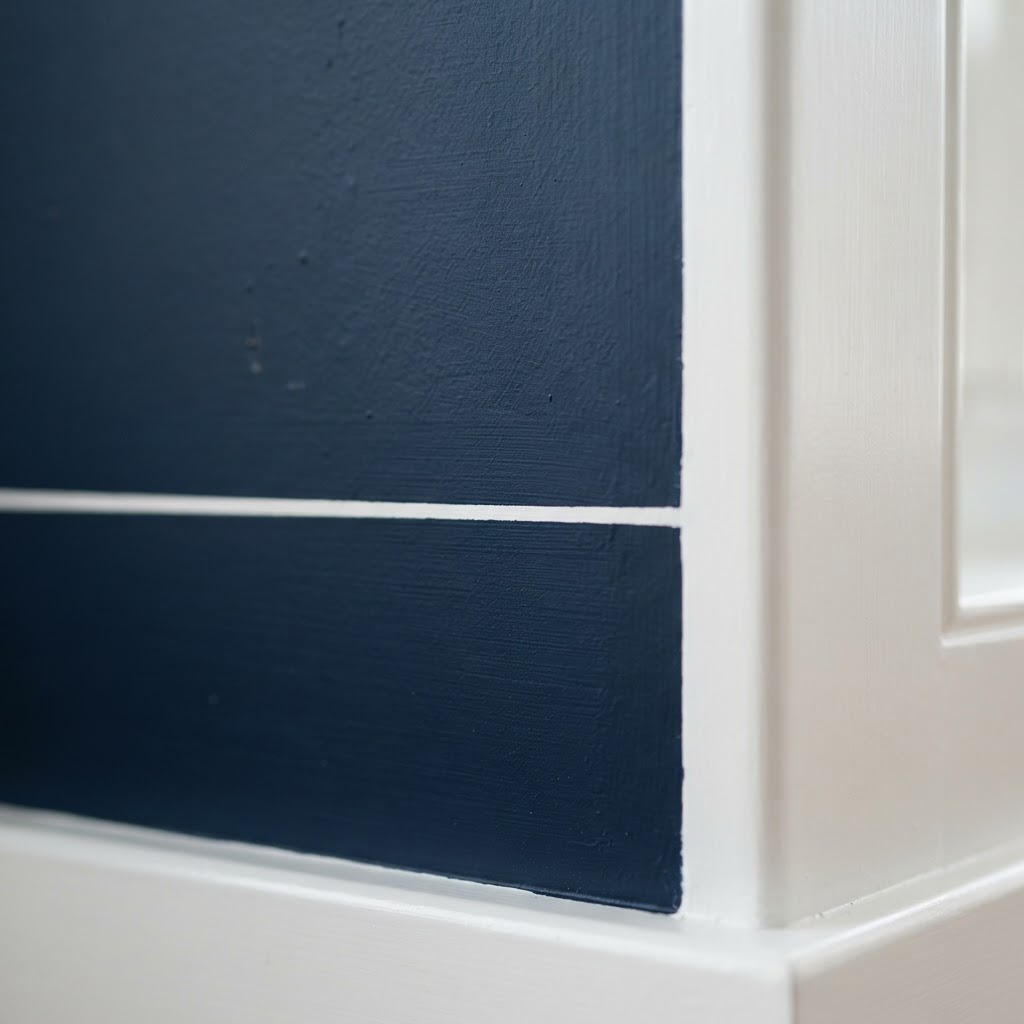
Anyone can open a can of paint. The difference between a finish that lasts three years and one that lasts ten is almost entirely in the preparation.
We spend more time on preparation than on painting, and it is the single biggest reason our finishes hold up. Paint is a thin film; it can only be as sound as the surface beneath it.
What proper preparation includes
- Washing and degreasing to remove oils, dust, and mildew
- Scraping and sanding loose or failing coatings
- Patching holes, dents, and cracks
- Caulking gaps at trim, windows, and corners
- Spot priming bare wood, patched areas, and stains
- Protecting floors, furniture, and fixtures
Why skipping it fails
Paint applied over a dusty, glossy, or damp surface bonds poorly. It looks fine for a season, then peels in sheets or blisters where moisture collects. Repairing that costs more than doing it properly the first time.
The bonding principle
Primer is not filler. Its job is to create a uniform surface that topcoat can grip, and to block stains and tannins from bleeding through. Choosing the right primer for the substrate — bare wood, drywall, previously painted metal — is a technical decision, not a formality.
Ask any painter what their preparation steps are. The answer tells you most of what you need to know.

